Arab Media & Society The Arab Media Hub

Issue 40, Summer/Fall 2025
http://doi.org/10.70090/AMS.40tasm
Abstract
This study examines YouTube’s role in mediating televised reporting on child marriage in Yemen by focusing on the case of Nujood Ali, who was forced into marriage at the age of eight and was divorced at ten. Her story drew global attention from social workers, human rights organizations, religious scholars, and politicians. By focusing on this case, this study explores how YouTube, as a global technology platform, shapes the visibility and framing of such stories, to determine the extent to which it influences both local and transnational audiences. In particular, this study explores how digital infrastructures and audience reactions construct meanings around gender, childhood, and justice in Yemen. The analysis identifies dominant themes and sentiment patterns across viewer comments. The results overwhelmingly show critical attitudes toward child marriage. They also reveal complex patterns of emotional engagement, cultural interpretation, and moral positioning in digital content. By situating this case within scholarship on digital platforms and media geopolitics, this study provides a case-based examination of how YouTube mediates visibility, affective circulation, and cross-cultural interpretation in relation to child marriage as an Arab social issue. The findings should be understood as illustrative insights derived from a single platform-mediated media example, rather than as generalizable claims about platform governance.
Introduction
Child marriage remains a common phenomenon in Yemen and in several other Arab countries. The true numbers of victims are likely much higher than those reported by official or international agencies. Underreporting, particularly in rural and conservative areas, obscures the full extent of the problem. The persistence of this practice and its devastating impact on children have prompted local and international organizations to take action (Mohammed 2025). However, despite ongoing efforts by local and international organizations, social scientists, Islamic scholars, and community advocates, the effectiveness of these initiatives often depends on the media platforms through which such concerns are communicated. Arab media, both traditional and digital, play an essential role in shaping public discourse on child marriage and other human rights issues (El Halabi 2017). Mediascapes in the region have become arenas where multiple players, including academics, politicians, and religious leaders, articulate and contest the meanings of childhood, gender, and morality. Campaigns on television and social media have not only raised awareness but also mobilized communities to advocate for legal and social change.
In the contemporary Arab media ecosystem, global technology platforms such as YouTube, Meta, X, and TikTok increasingly mediate the circulation of social and political narratives. Through their infrastructures of visibility, participation, and engagement, these platforms influence how content becomes accessible to wider audiences and how they are interpreted across different cultural contexts. In this study, these dynamics are examined through a single, widely circulated case: Nujood Ali’s story and its reception on YouTube. Despite their restrictions, these platforms also provide victims with opportunities to amplify their voices and reach transnational audiences (Mohammed 2025). In this sense, global digital platforms become sites of affective politics; spaces where empathy, outrage, and moral judgment circulate beyond national borders (Highfield and Miltner 2023; Brady et al. 2021).
Problem, Significance, and Objectives
Despite the growing interest in Arab social media and digital platforms, a significant issue remains inadequately addressed: how global digital platforms can reshape local media narratives into transnational discourses. This transformation is influenced by various factors, including algorithmic visibility, affective engagement, and cross-cultural interpretation. Several studies have examined either media representations of social issues or audience reactions in digital spaces. There is also a dearth of studies that combine these dimensions to investigate the extent to which these platforms’ infrastructures may simultaneously mediate narrative construction and public sentiment.
The significance of this study lies in its bridging of this gap. This study focuses on a single televised report, which also circulated on YouTube, about a victim of child marriage in Yemen, namely Nujood Ali, Yemen’s youngest divorcee. The study adopts a micro-analytical approach to demonstrate how digital platform power may operate in practice. This approach enables tracing how a local Arab media narrative was recontextualized within global digital infrastructures. Thus, it highlights the role digital platforms are likely to play in shaping visibility, amplifying affect, and structuring moral and ideological discourse.
The main objectives of this study are: (1) to analyze the thematic construction of Nujood Ali’s story as it was depicted in a televised media report; (2) to examine the emotional and ideological patterns in audience responses on YouTube; and (3) to investigate how YouTube’s infrastructures mediate the visibility, interpretation, and affective circulation of this case in a transnational context. Through these objectives, this study examines how platform-mediated conditions of visibility, affective engagement, and interpretation manifest in a specific case involving the circulation of Nujood Ali’s story on YouTube.
Literature Review
Current research on media, child marriage, digital platforms, and Arab public discourse can be divided into three interconnected categories: (1) studies on media representation and advocacy, (2) research on digital platforms and affective publics, and (3) analyses of platform power and digital geopolitics. While each of these areas offers valuable insights, they often remain analytically distinct. As a result, important gaps remain in understanding how media narratives and platform-mediated audience responses interact in transnational contexts.
The media’s role in addressing social issues such as child marriage has been widely recognized across diverse cultural contexts. Studies in Africa and South Asia demonstrate that mass media and advocacy campaigns significantly shape public awareness and policy debates around child marriage. Nnenna (2023) argues that, in Nigeria and Uganda, the persuasive capacity of mass media should be harnessed to educate communities about the harms of early marriage and to empower women regarding their rights. Similarly, Raghunathan et al. (2021) found that multimedia campaigns in India’s Jharkhand and Bihar states effectively altered public attitudes toward early marriage through sustained storytelling and localized media engagement. These studies largely focus on media as a tool of awareness and persuasion, without examining how global digital platforms transform the circulation and reception of such narratives beyond national contexts.
In the Arab world and Middle Eastern context more broadly, both traditional and digital media have sought to reshape social norms concerning gender and child marriage. Alqahtani and Alqahtani (2022) examined Sayidaty magazine’s 2010 campaign “No Marriage for Minors,” which aimed to raise awareness of the psychological and physical consequences of early marriage. Their study found that the magazine’s emotive storytelling and use of public figures reframed the issue as a national concern requiring legal reform. Similarly, Kasimoğlu and Tekin (2023) investigated Turkish local media coverage of early forced marriages and found that, despite media efforts to highlight the social and educational consequences, deep-rooted patriarchal norms continued to shape both journalistic framing and public reception. While these studies highlight the role of regional media in shaping social norms, they tend to assume relatively stable media environments and do not fully account for the increasing role of global digital platforms in mediating Arab narratives across borders.
Scholars have increasingly argued that global digital platforms act as geopolitical actors that shape transnational visibility and public discourse. Tello (2023) demonstrates how data infrastructure and digital platforms are embedded in global power asymmetries that affect whose narratives are heard. On the other hand, Bouquillion et al. (2023) conceptualize major social media and cultural platforms as infrastructures that reorganize transnational cultural circulation, including within the Global South. Zayani (2015) similarly contends that Arab digital media operate within systems of algorithmic governance dominated by Western political economies, where global platforms act as intermediaries that privilege certain voices and suppress others. Although this body of work establishes that digital platforms undoubtedly influence visibility and discourse, it often remains at a macro-theoretical level. There remains a lack of in-depth empirical analysis of how these dynamics operate in specific media cases, especially in Arab contexts.
Studies have also shown that digital platforms do not only host content but actively shape whose voices are seen and heard. For example, Hurley (2021) finds that Arab women’s Instagram self-presentations are shaped by broader socio-technological conditions that influence visibility and agency. Similarly, Alharb and Albawardi (2025) demonstrate how representations of women on X reflect evolving public discourse affected by platform logics. Thus, these studies suggest that platform infrastructures influence how visibility, agency, and emotional engagement are distributed within digital environments. Within this context, research on child marriage in Arab media provides insight into these power dynamics. Zein (2020) analyzed Arab television coverage of Syrian refugees in Lebanon and Jordan, revealing how mainstream Arab channels represented child brides and mothers as subordinate subjects, often speaking on their behalf rather than granting them agency. When such televised reports circulate on platforms like YouTube, they enter new environments of visibility and audience participation that may influence how meanings are interpreted and debated. Mohammed (2025), in a sentiment analysis of YouTube comments on the case of Nujood Ali, found that while most responses condemned child marriage, the discussion was deeply shaped by cross-cultural frames and emotional intensity that often characterize YouTube’s engagement-driven environment. Similarly, Al-Motlaq (2025) examined Facebook discourse on child marriage and found that online publics reproduce polarized narratives, ranging from cultural justification to conspiracy theories, showing how they negotiate moral boundaries in digital spaces. These studies provide valuable insights into audience reactions; however, they tend to examine user discourse independently of the media content that generates it. As a result, the relationship between media representation and platform-mediated audience responses remains underexplored.
Additionally, many studies have addressed digital affect and the politics of visibility. Kraidy (2016) and Al-Rawi (2020) argue that social media platforms may contribute to the circulation and prominence of emotional engagement, particularly outrage, empathy, and moral judgment, through algorithmic curation. Papacharissi (2015) terms this phenomenon “affective publics,” where emotional expression becomes a form of political participation. In Arab contexts, however, this affective circulation is shaped by linguistic and technical asymmetries: Arabic-language content often receives less algorithmic visibility and poorer transcription or moderation accuracy, reproducing digital marginalization. These limitations demonstrate how technological design and linguistic support can influence participation and visibility in digital environments.
Gendered media analyses also contribute to this understanding of digital environments. Sakr (2004) highlights the persistent underrepresentation of Arab women in media production and leadership roles. However, Gowda (2024) and Skalli (2006) note that new technologies offer opportunities for greater visibility but remain constrained by patriarchal norms. Okiyi et al. (2020) similarly find that in Nigeria and comparable developing contexts, male-dominated newsroom structures lead to underreporting of gender-based issues such as child marriage. These studies show that gendered visibility remains shaped by structural inequalities, although digital platforms introduce additional conditions through which such representations circulate and are encountered by audiences. Another dimension of these digital geopolitics lies in the representation of Islam and Arab culture. Luckenbaugh (2016) critiques Western media portrayals of sharia as a major driver of child marriage, arguing that such framing grossly oversimplifies complex cultural and socioeconomic realities. When these narratives circulate on global platforms, they often merge with user-generated discourse that blends humanitarian concern with Orientalist bias, reinforcing asymmetrical global gazes toward Arab societies.
Building on this body of scholarship, the present study examines how a widely circulated report on Nujood Ali was represented, received, and interpreted in a YouTube-mediated environment. Rather than treating digital platforms as neutral channels, this study considers how conditions of visibility, audience participation, and affective engagement may influence the circulation and interpretation of media narratives. In doing so, it brings together scholarship on media representation, audience discourse, and platform-mediated communication within a single qualitative case study. Taken together, existing scholarship has generated important insights into media representation, platform-mediated visibility, and audience discourse. However, these aspects of research have often been examined separately. Few studies have explored how a specific Arab media narrative is simultaneously represented, circulated, and interpreted in a digital platform environment. By analyzing a widely circulated report on Nujood Ali and its associated YouTube comments, the present study provides a case-based examination of how these dimensions intersect within a single platform-mediated media example.
Theoretical and Conceptual Framework
This study adopts critical media analysis as its primary analytical framework to examine how the televised report and associated YouTube comments construct meanings around child marriage, gender, and justice. In addition, insights drawn from various studies on digital platforms and digital geopolitics serve as an additional contextual framework for interpreting how YouTube’s technological infrastructures may influence the visibility, circulation, and reception of these types of narratives among transnational audiences. This study distinguishes between analytical and interpretive frameworks. Critical media analysis provides the primary analytical framework through which the televised report and audience comments are examined. Platform studies and digital geopolitics function as interpretive perspectives that help situate the findings within broader discussions of platform-mediated visibility, affective circulation, and cross-cultural interpretation. Accordingly, the empirical analysis remains grounded in critical media analysis, while scholarship on platform studies is used to interpret the wider digital environment in which the case is situated.
Critical Media Analysis
Critical media analysis provides the foundation for interrogating how media texts reproduce, challenge, and negotiate cultural and ideological meanings. Berger (2005) conceptualizes it as a technique for examining patterns and representations within media artefacts, while Stocchetti and Kukkonen (2011) highlight the role of media in distributing power and shaping public consciousness. This study employs critical media analysis to examine the narrative and themes present in Nujood’s story. It also helps uncover underlying ideologies related to gender, religion, culture, and justice, while analyzing how the report aims to evoke empathy and moral urgency. Additionally, critical media analysis sheds light on how media framing influences broader discussions on child marriage in Arab societies. This approach positions the television report as a cultural artefact that both reflects and shapes debates about gender norms and child protection.
Platform Studies and Digital Geopolitics as Interpretive Perspectives
To situate the analysis within contemporary media ecosystems, this study draws insights from platform studies and digital geopolitics. Global platforms such as YouTube are not passive distribution channels; rather, they provide conditions that shape visibility, affective circulation, and meaning-making (Gillespie 2018; Bucher 2018). Through technical architectures such as recommendation systems, ranking metrics, moderation policies, and language processing tools, digital platforms are understood to influence how content is surfaced, interpreted, and circulated across national borders (Beer 2017; van Dijck et al. 2018). These platform logics play a decisive role in shaping how Arab narratives gain, or fail to gain, global visibility, embedding them within broader transnational hierarchies of attention and power. At the same time, linguistic inequality persists across these platforms. Arabic-language content, for instance, is often disadvantaged by automated systems for transcription, translation, and content moderation tools, leading to inaccuracies and reduced algorithmic reach (Zayani 2015; Gillespie 2018).
It is worth noting that the concept of “YouTube as a geopolitical actor” is defined in a limited, analytically grounded manner in this study. Rather than implying that the platform operates as a state-like political entity, the phrase refers to how YouTube’s digital infrastructures shape transnational flows of visibility, meaning, and affect. Specifically, this study focuses on three dimensions that are supported by empirical analysis. First, YouTube functions as a geopolitical actor by shaping transnational visibility and influencing how a locally produced Arab media narrative (the case used in this study) becomes accessible and prominent in global digital spaces. Second, the platform provides optimal conditions for affective circulation, enabling emotions such as empathy, outrage, and moral judgment to circulate across geographically dispersed audiences. Third, YouTube may influence cross-cultural interpretation, as its algorithmic and linguistic systems, originally determined in and still dominated by English, mediate the framing, translation, and understanding of Arab social issues by diverse publics. These dimensions provide an operational definition that guides the analysis, ensuring that the concept of “geopolitical actor” remains closely aligned with the scope of the data and the study’s single-case design. Throughout this article, this concept functions primarily as an interpretive lens rather than as a claim that platform processes have been directly observed or measured.
Methodology
This study employs a qualitative thematic analysis of a television report on Nujood Ali, combined with a sentiment analysis of the report’s associated YouTube comments to explore how traditional media narratives interact with platform-mediated public responses. The final corpus consisted of 255 comments. The dataset was predominantly Arabic-language, with 194 comments (76.1%) written entirely in Arabic, 52 comments (20.4%) containing a mixture of Arabic and Latin-script elements, and only 9 comments (3.5%) written exclusively in English or other Latin-script forms. This linguistic profile reflects the primarily Arabic-speaking audience engaged with the video while also indicating a degree of transnational participation. Table 1 summarizes the key characteristics of the selected video and the comment corpus analyzed in this study.
Table 1: Summary of the Video and Comment Corpus
| Item | Description |
| Platform | YouTube |
| Case | Nujood Ali and child marriage in Yemen |
| Video language | Arabic |
| Video duration | 00:09:46 |
| Upload date | July 18, 2023 |
| Date of comment collection | December 30, 2023 |
| Comment collection period | December 2016 - December 2023 |
| Total comments retrieved and analyzed | 255 |
| Top-level comments | 160 |
| Replies | 95 |
| Unique commenters | 207 |
| Languages represented in comments | Arabic (76.1%), Mixed Arabic–Latin script (20.4%), English/Latin script (3.5%) |
| Data cleaning | Irrelevant, non-analytical, and offensive comments removed prior to analysis |
| Analytical methods | Thematic analysis and AI-assisted sentiment analysis |
This study follows the following procedures:
- A single, widely circulated televised report was deliberately selected based on its high visibility, accessibility on YouTube, and relevance in global discussions of child marriage. Selection criteria included the case’s prominence, the availability of a substantial comment corpus, and the report’s circulation among transnational audiences. This micro-level focus aligns with the study’s aim of examining how specific mediated narratives become globally visible and emotionally engaged in digital platform environments (Plantin and Punathambekar 2018). In this context, “widely circulated” is operationalized in terms of view count, user engagement (number of comments), and continued accessibility on the platform.
- The video was downloaded from YouTube and transcribed using AI-based speech-to-text tools, namely Heitech, as shown in Figure 1.
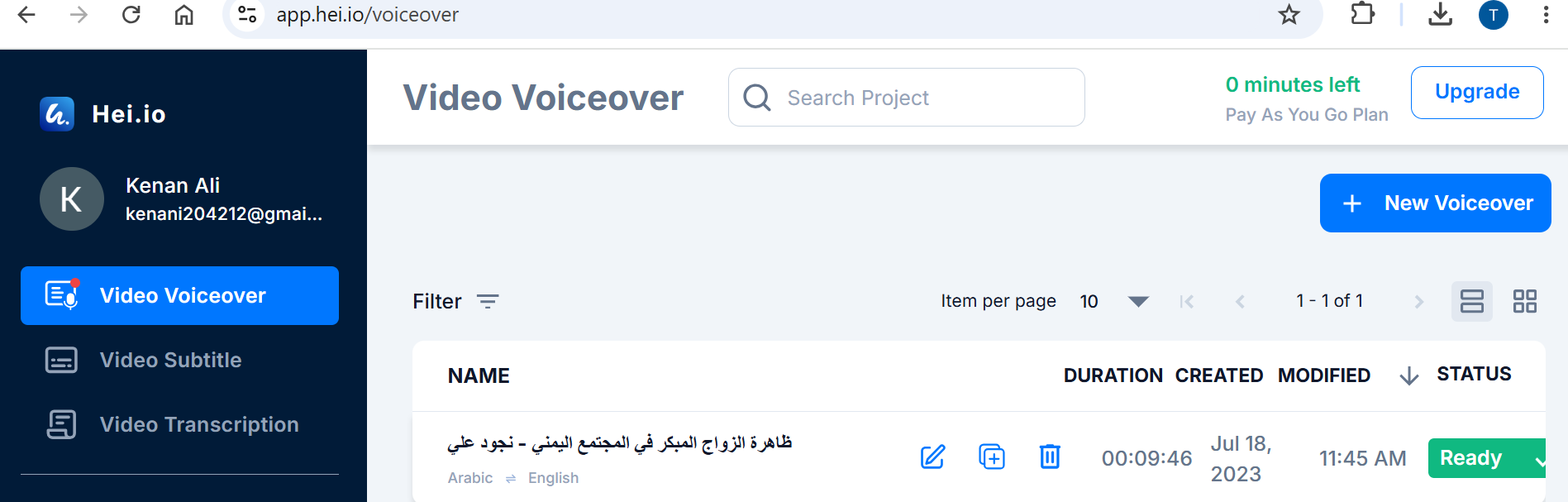
Figure 1: Snapshot of the transcript of the video
Due to known limitations in AI processing of Arabic and right-to-left scripts, the automated transcript was manually reviewed for accuracy.
- The YouTube video was identified through Arabic keyword-based search queries related to “Nujood Ali” and “child marriage in Yemen.” All publicly available comments associated with the video at the time of data collection were extracted. Irrelevant entries (e.g., spam, duplicates, or non-discursive content) were removed during a cleaning phase to ensure analytical consistency. Entries were excluded if they consisted solely of emojis, hyperlinks, duplicate posts, advertising content, or other material that did not contribute to discursive analysis.
- The video transcript was imported into ATLAS.ti for open coding and thematic analysis. Codes were generated inductively through an iterative reading process. Initial open coding was followed by the grouping of codes into broader thematic categories. To enhance analytical rigor, coding decisions were continuously refined through repeated engagement with the data, ensuring consistency and coherence across themes. This approach aligns with established qualitative thematic analysis procedures (Clarke and Braun 2017). Python-based visualizations helped illustrate thematic connections and pinpoint the primary narrative theme clusters (Roberts et al. 2014).
- All comments associated with the YouTube video were analyzed using ATLAS.ti’s AI-assisted sentiment analysis tool to provide a general overview of affective tendencies within the dataset (Figure 2).
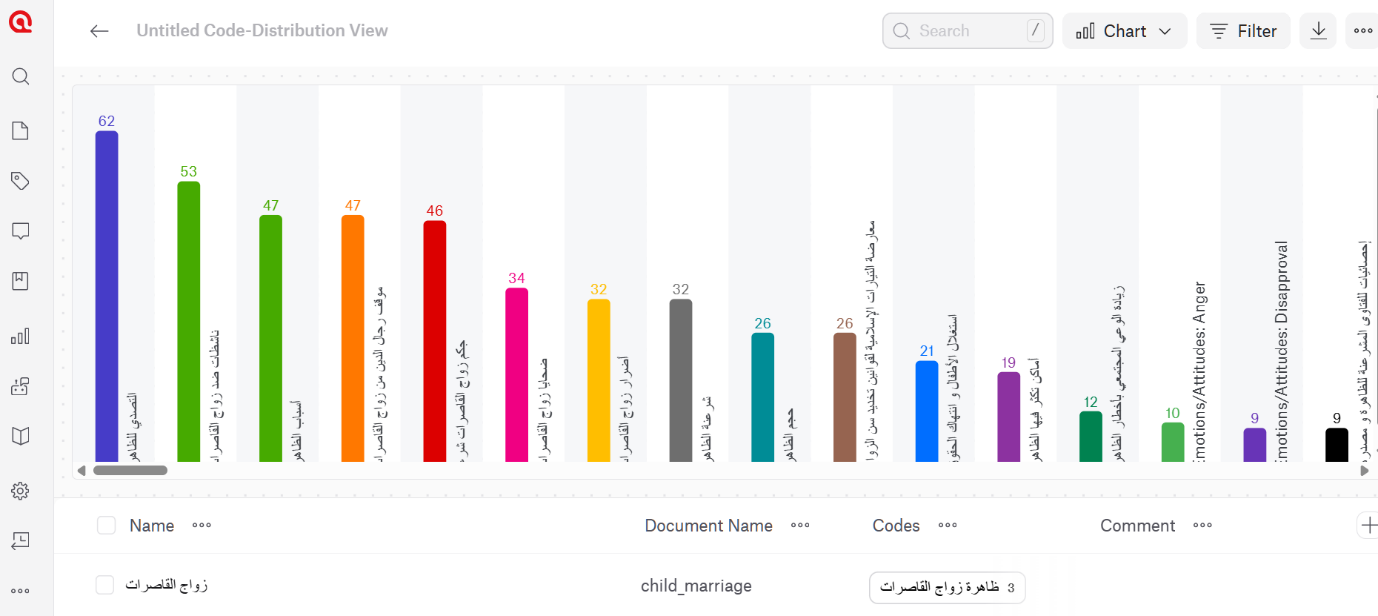
Figure 2: Snapshot of the ATLAS.ti’s AI-assisted coding of comments
Sentiment categories included positive, negative, and neutral classifications and were generated by the software. Importantly, sentiment analysis was not treated as a standalone or definitive method but as a complementary tool to support qualitative interpretation. Following the automated sentiment analysis, comments that appeared linguistically or contextually ambiguous were manually reviewed (Figure 3).
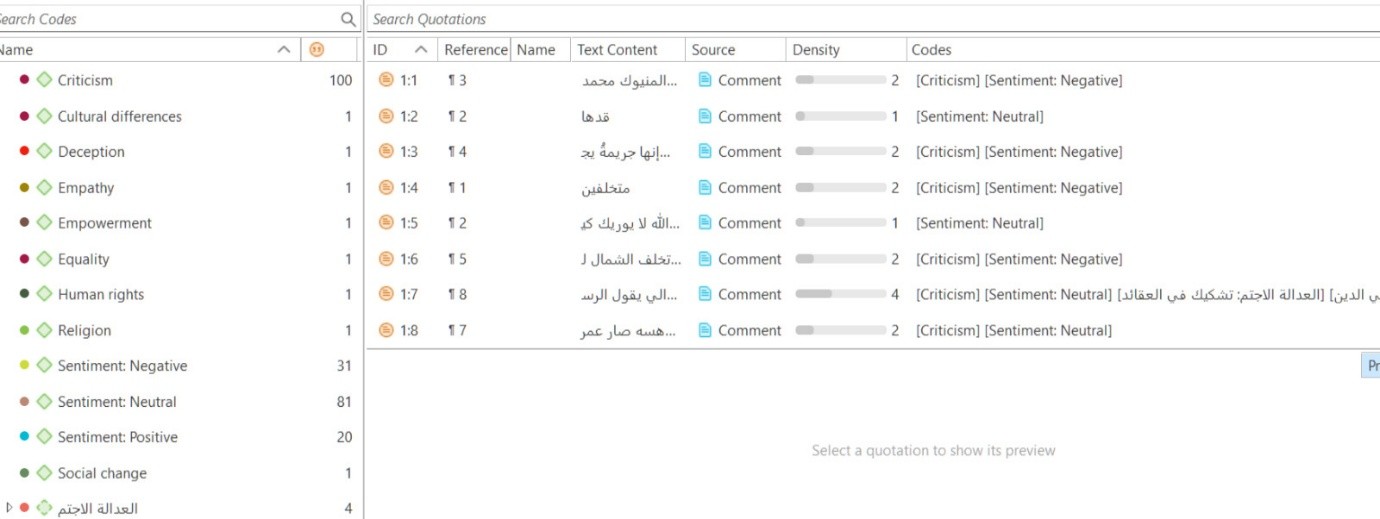
Figure 3: Snapshot of the manual coding in ATLAS.ti
Particular attention was paid to comments containing religious references, idiomatic Arabic expressions, sarcasm, and culturally embedded meanings. In such cases, qualitative interpretation was prioritized when discussing audience responses.
This combined approach allows sentiment patterns to be used indicatively rather than conclusively, with qualitative thematic analysis remaining the primary method for interpreting audience responses. Accordingly, sentiment analysis was primarily used to identify broad affective tendencies within the corpus, while the thematic and discursive analysis remained the principal basis for interpretation.
- The final phase focused on analyzing both the report’s themes and public sentiment from the perspective of platform geopolitics. This included examining how emotionally charged content may gain visibility within platform-mediated environments. It also involved investigating how Arabic-language comments circulate within algorithmic and linguistic constraints. In addition, the analysis seeks to understand how global audiences interpret Arab social issues through platform-mediated discourse. Finally, it explores how digital infrastructures may influence the moral economy surrounding child marriage.
This study’s platform-aware layer transforms it from a traditional media analysis into a contribution to debates on platform power, visibility, and digital mediation in Arab contexts (van Dijck et al. 2018; Gillespie 2018).
It is important to note that AI-based sentiment analysis tools have limitations, particularly in processing Arabic language nuances, sarcasm, and culturally embedded expressions. For this reason, sentiment results are interpreted cautiously and used to support, rather than replace, qualitative analysis. This study does not aim to provide a statistical measurement of audience attitudes. Instead, it adopts an interpretive qualitative approach, in which comment patterns are analyzed as indicative and exploratory, rather than representative of broader public opinion. The findings should therefore be interpreted as qualitative insights into a specific comment corpus rather than as representative measurements of broader audience attitudes.
Analysis and Findings
This section presents the study’s findings through an integrated analysis of the televised report on Nujood Ali and the associated YouTube comments. The findings are analyzed primarily through critical media analysis, while concepts from platform studies and digital geopolitics are drawn upon where relevant to interpret broader patterns of visibility, affective engagement, and cross-cultural interpretation. Guided by the research questions, the analysis proceeds in two stages. First, a qualitative thematic analysis examines how the television report constructs meanings around child marriage, childhood, authority, and justice within the Yemeni context. Second, an analysis of YouTube comments explores how audiences interpret, respond to, and reframe these representations through affective and discursive practices.
Thematic Analysis of the Televised Report
The televised report on Nujood Ali presents multiple underlying themes, as shown in Figure 4.
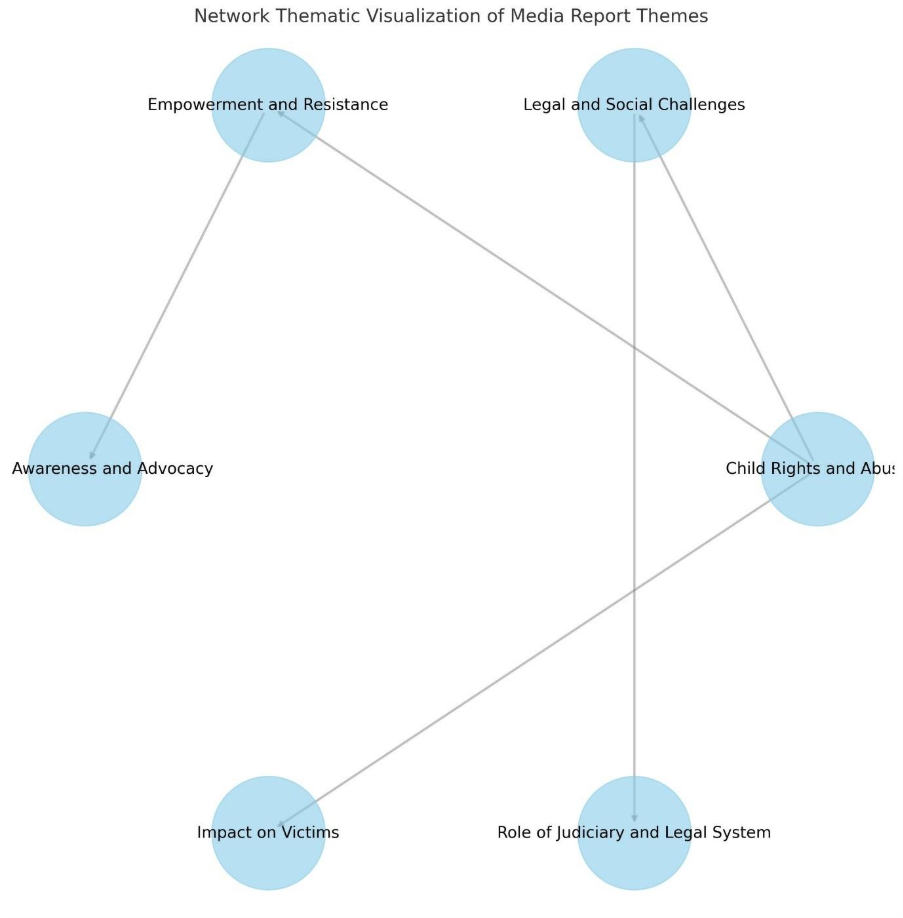
Figure 4: Visualization of the major themes in the report
While the thematic categories identified above provide an overview of the report’s content, a critical media analysis approach requires examining how these themes construct meaning and position social actors within broader ideological frameworks. In this regard, the televised report does not merely describe child marriage but actively frames Yemen, childhood, authority, and victimhood in specific ways that shape audience interpretation. The following analysis, therefore, moves beyond thematic identification to examine how these meanings are discursively constructed:
- Child rights and abuse: Child marriage is the central theme. The practice is portrayed as brutal, inhumane and a form of child abuse in the video. The story of an eight-year-old girl, Nujood Ali, who was forced to marry a man in his thirties, highlights the severe implications and abuse that result from the practice of child marriage. The girl sought a divorce in court and became the youngest divorcee in Yemen and perhaps even globally. The framing of child marriage as abuse positions childhood as inherently vulnerable and in need of protection, aligning the narrative with global human rights discourse. At the same time, this framing universalizes the experience of victimhood, potentially oversimplifying the socio-cultural complexities of the Yemeni context in favor of a morally unambiguous narrative.
- Legal and social challenges: The report also highlights the challenges and loopholes in the Yemeni legal framework that allow child marriages to occur. It also addresses the cultural norms and traditions that perpetuate this practice, despite its harmful effects and grave consequences on children. Yemen is thus represented as a space where legal structures are insufficient to protect vulnerable populations, reinforcing an image of institutional weakness. This representation risks framing the issue as a national deficiency rather than as part of broader structural and transnational inequalities affecting child marriage globally.
- Empowerment and resistance: The report depicts Nujood’s story as a narrative of empowerment and resistance. Despite her age and the pressures of a conservative society, she was able to overcome her circumstances when she sought legal action for separation. In doing so, she challenged not only her family’s decisions but also broader societal norms. The portrayal of Nujood as a figure of resistance individualizes the narrative, emphasizing personal courage over structural constraints. While this humanizes the case and generates empathy, it may also shift attention away from systemic factors by framing change as dependent on exceptional individual action.
- Global awareness and advocacy: The fact that Nujood’s case has received local and international attention underscores the theme of global awareness of and advocacy against child marriage. Nujood’s story has sparked broader discussions on this issue and potentially inspired and encouraged other victimized girls to seek help. Many girls have since followed Nujood’s example in various provinces in Yemen, and they were able to thwart many child marriages. The emphasis on global attention in the video situates the case within a transnational humanitarian framework, transforming a local issue into a globally recognizable moral concern. This process contributes to the universalization of the narrative, aligning it with international advocacy discourses while potentially reframing Yemen through an external gaze.
- Impact on victims: The personal, physical, and psychological impact of child marriage on victims is investigated through Nujood’s experiences. The report discusses the emotional and physical abuse she endured. It also highlights Nujood’s aspirations for a normal childhood and for education. Her basic rights as a child were initially revoked by her marriage. The detailed depiction of physical and emotional suffering contributes to a humanizing narrative that foregrounds empathy. However, such representation may also border on emotional intensification, raising questions about whether the report partially relies on affective appeal to elicit audience responses.
- Role of judiciary and legal system: The report illustrates the critical role of the judiciary in addressing such cases. Nujood approached legal professionals who voluntarily supported her to obtain a divorce through the courts. The unprecedented position of the judge highlights the potential for legal systems to support and protect victims of child marriage. Despite existing limitations, religious beliefs, and traditions, the judge took Nujood’s side, protecting her and ordering her divorce. The judiciary in the video is framed as a source of moral and institutional authority, offering a counterpoint to familial and cultural practices. This positioning casts the Yemeni legal system as a site of potential justice while simultaneously reinforcing a narrative in which authority is redefined by modern legal frameworks rather than traditional structures.
These themes collectively provide a comprehensive view of the complex issue of child marriage in Yemen. They focus on both the personal impact of the practice on victims and broader socio-legal dynamics. Thus, these thematic constructions reveal that the report operates through a combination of humanizing, universalizing, and partially sensationalizing strategies. Yemen is represented as a site of social and institutional struggle, childhood is constructed as vulnerable and in need of protection, and authority is configured through legal and humanitarian frameworks. At the same time, the narrative simplifies complex socio-cultural dynamics into a moral framework that is easily legible to global audiences. This framing is crucial for understanding how the report becomes suitable for circulation on platforms such as YouTube, where emotionally charged and morally provocative narratives are more likely to gain visibility and engagement. Having examined how the report constructs meanings around child marriage, childhood, and authority, this study’s analysis now turns to audience responses in order to explore how these representations were interpreted, contested, and rearticulated in the digital platform environment.
Sentiment Analysis: Platformed Emotions and Geopolitical Mediation
This section explores patterns of affective expression in user comments, treating them as indicative of how audiences interpreted and responded to the media report, rather than as statistically representative measures of public attitudes. Figure 5 provides the word cloud of these comments.
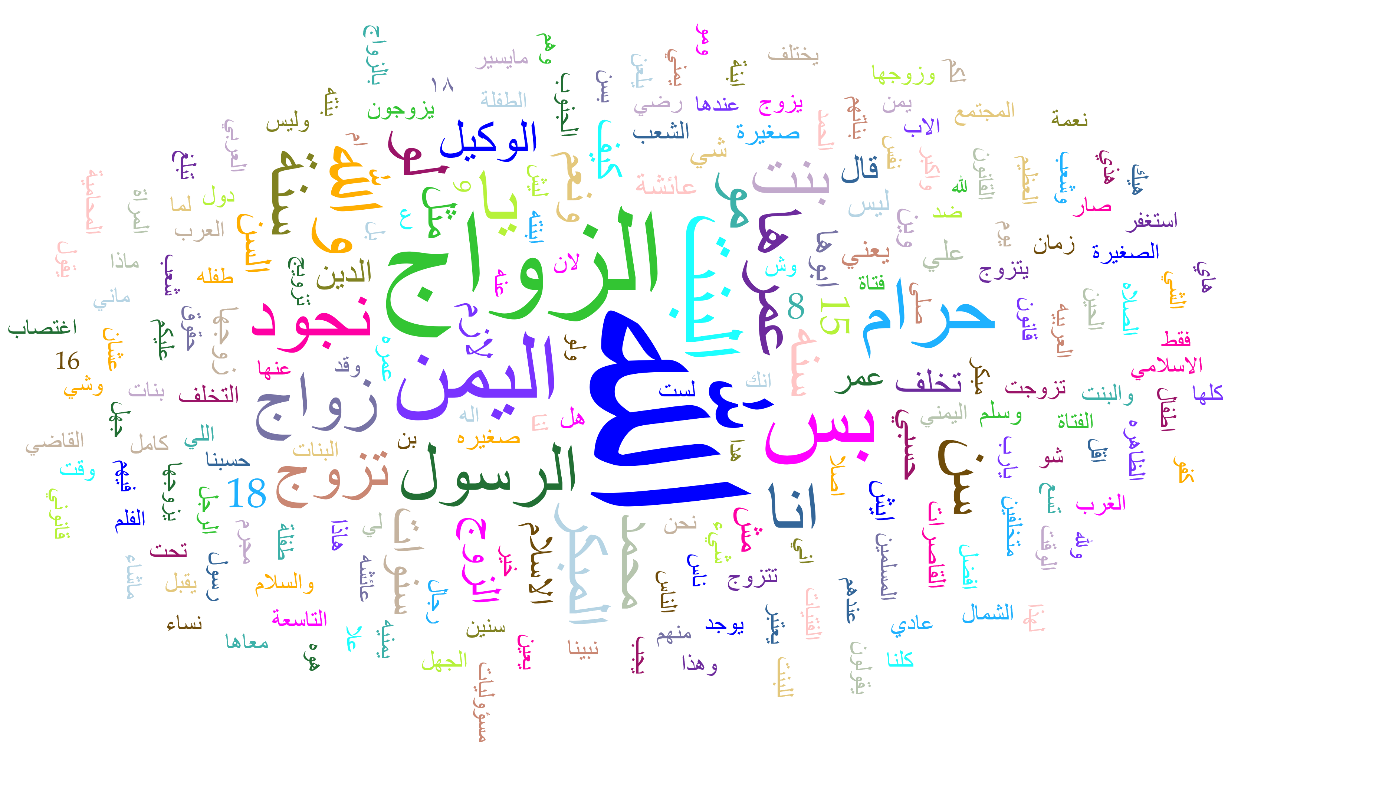
Figure 5: Word cloud of the YouTube comments
Public reactions to stories of victims of child marriage are deeply emotional. They often reflect empathy for victims and condemnation of perpetrators. On global platforms such as YouTube, these emotions are articulated through textual, visual, and multimodal expressions that extend far beyond national boundaries. By focusing on the comments section as a site of affective and geopolitical negotiation, this study’s analysis reveals how global platforms not only host but also shape the circulation, interpretation, and emotional framing of Arab social issues. These affective patterns are further explored through qualitative analysis of selected comments, thereby enhancing understanding of how emotions, cultural meanings, and moral positions are articulated on the platform.
Overview of Sentiments and Coding Process
As noted in the methodology section, all YouTube comments were exported to ATLAS.ti and analyzed using an AI-powered sentiment analysis tool. Figure 6 provides an overview of sentiments across the comments on the report.
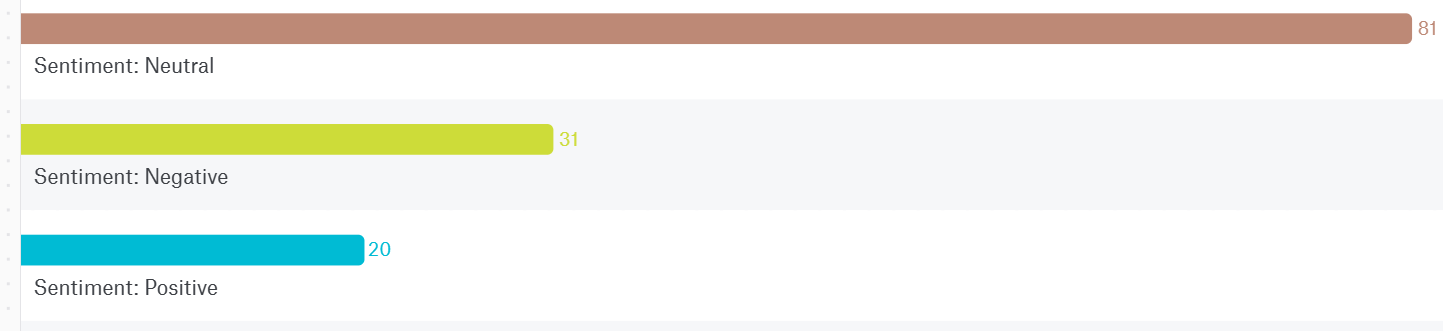
Figure 6: Distribution of sentiments in the YouTube video comments
The distribution presented above reflects general trends in the dataset and should not be interpreted as a statistically representative measure of public opinion.
All comments were carefully coded, and the data were cleaned and filtered to remove irrelevant or repetitive entries. Figure 7 presents a network analysis of attitudes, sentiments, and themes across the YouTube comments.
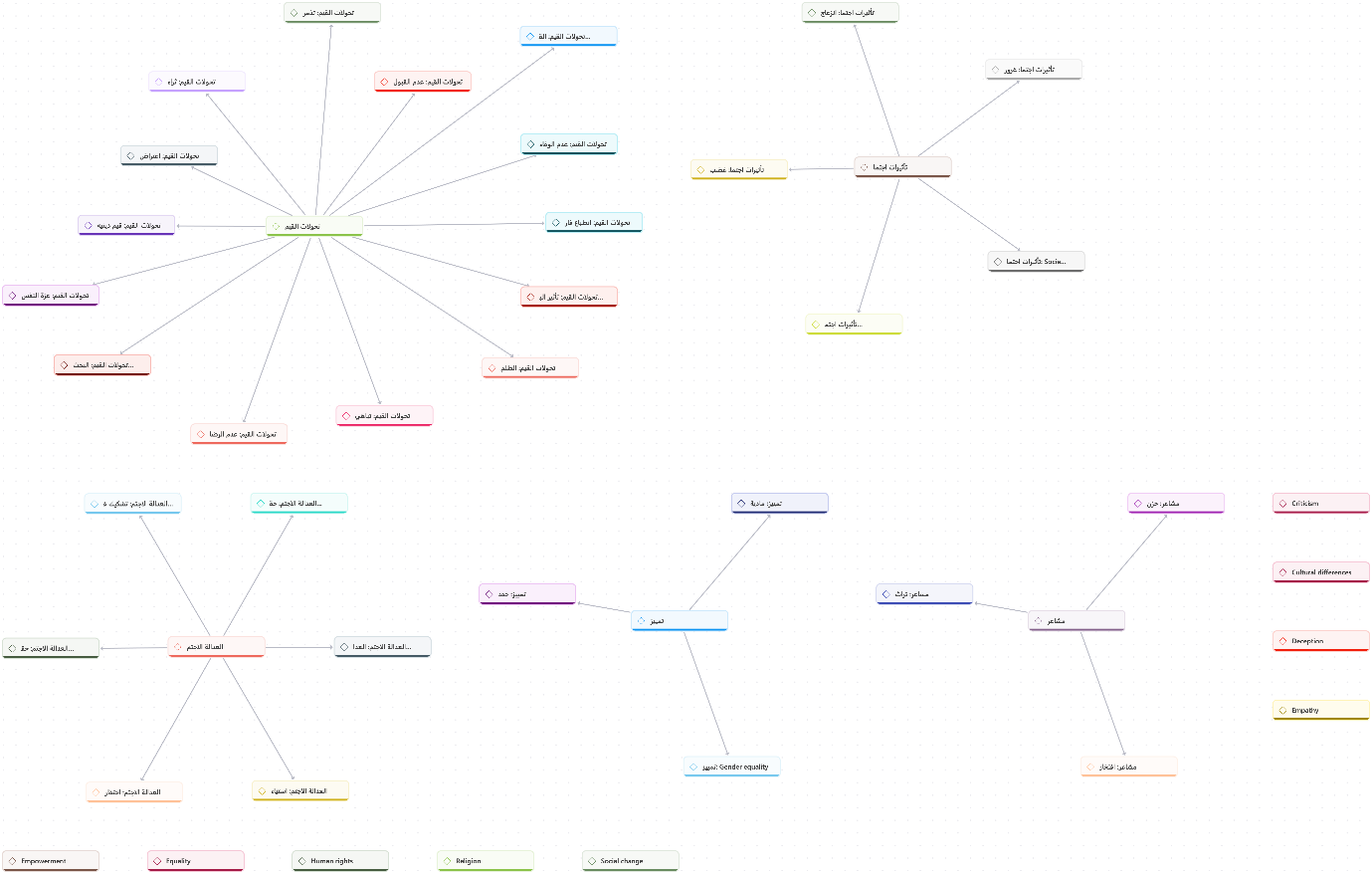
Figure 7: Network analysis of sentiments across comments
The coding revealed multiple emotional registers, ranging from outrage and sorrow to religious justification and moral defense. In general, sentiments were overwhelmingly negative towards the practice of child marriage, reflecting public condemnation and concern for victims’ welfare. The dominant emotional categories included anger, empathy, moral outrage, and calls for divine or judicial justice. Such sentiments are not only reflections of personal belief, but they also reveal how platformed publics construct collective moral discourse in YouTube's digital sphere. The patterns observed in the comments may be interpreted using studies on platformed visibility and affective publics, which suggest that digital environments can influence the circulation and prominence of emotionally charged forms of expression. To enhance analytical clarity, the following discussion organizes audience responses into broader discursive formations that reflect recurring patterns of meaning-making and emotional expression. Each grouping is examined in terms of its defining features, illustrative examples, and interpretive implications within the framework of platform-mediated affective publics.
- Themes of Condemnation, Empathy, and Cultural Self-critique
This cluster of themes captures a dominant set of responses characterized by moral condemnation of child marriage, expressions of empathy toward the victim, and, in some cases, critical reflection on broader cultural and social practices. These discourses often overlap, combining emotional reactions with ethical judgment and self-reflection. For example, a large proportion of comments expressed intense condemnation of child marriage and direct criticism of those involved in Nujood’s case, including her family, the groom, and the judicial authorities who approved the marriage. The following Arabic-language comment vividly illustrates this sentiment:

The comment reflects a moral critique grounded in religious and ethical reasoning while rejecting the social legitimacy of child marriage.
Several other comments expressed similar disapproval while recognizing the courage and resilience of Nujood and her lawyer, Shatha Mohammed. These latter types of comments often blended empathy and admiration with anger, reinforcing the dual affective register of outrage and solidarity typical of digital humanitarian discourse (Papacharissi 2015; Al-Rawi 2020). These responses demonstrate how YouTube functions as a space for the articulation of moral outrage and empathy, where users collectively construct child marriage as an unequivocal violation of ethical and social norms. The intensity of condemnation reflects the dynamics of affective publics, in which emotional expression becomes a form of participation and visibility. At the same time, comments that incorporate cultural self-critique suggest that the platform enables forms of internal reflection within Arab societies. By publicly acknowledging issues such as “ignorance” or “backwardness,” users engage in discursive self-positioning that is simultaneously introspective and globally visible. This dual orientation reflects the geopolitical dimension of platformed discourse, where local critique is exposed to transnational audiences and contributes to broader narratives about Arab societies. Collectively, these responses demonstrate how audiences negotiate meanings of childhood, vulnerability, and justice within a highly visible digital media environment.
- Affective Polarization and Religious Discourses
This category captures polarized discourses in which users draw on religious frameworks either to justify or to critique child marriage. These responses reveal competing interpretations of religious authority and cultural legitimacy within the platform environment. While many comments invoked Islam to condemn the practice, others cited religious texts to justify early marriage. One user, for example, cited the Prophet Muhammad’s marriage to Aisha and the opinions of Islamic jurists to legitimize child marriage, arguing that sharia does not specify a minimum marriage age. One user also accused filmmakers and international organizations, such as UNICEF, of conspiring against Islam and Yemeni culture. The comment reads:
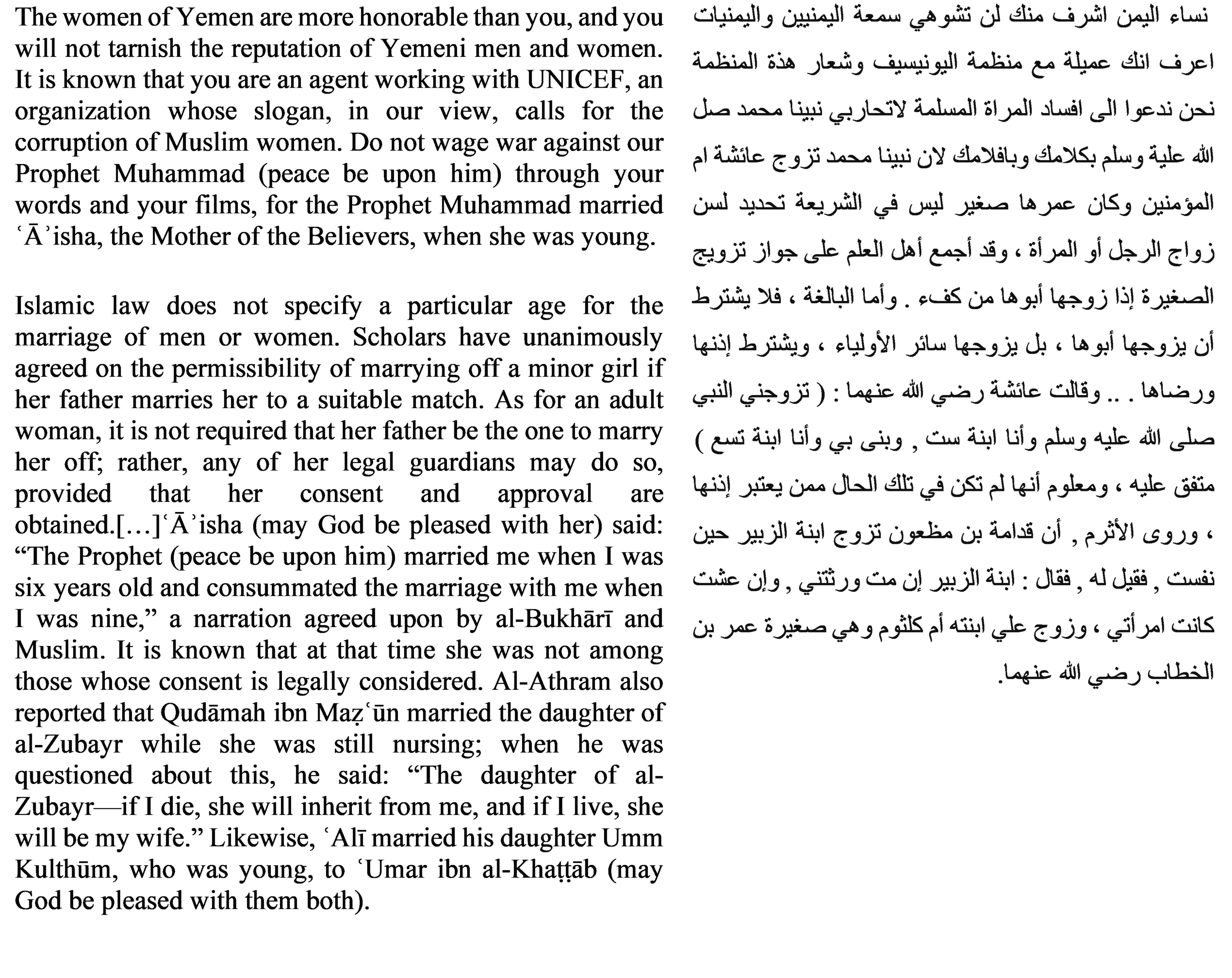
The extensive citation of religious texts and juristic opinions demonstrates how users cite religious interpretive precedent to defend particular social practices in public digital spaces (Fuist 2014). In response to religiously defensive justifications of child marriage, another comment adopts a markedly different stance grounded in historical awareness and contextual interpretation of Islamic tradition:
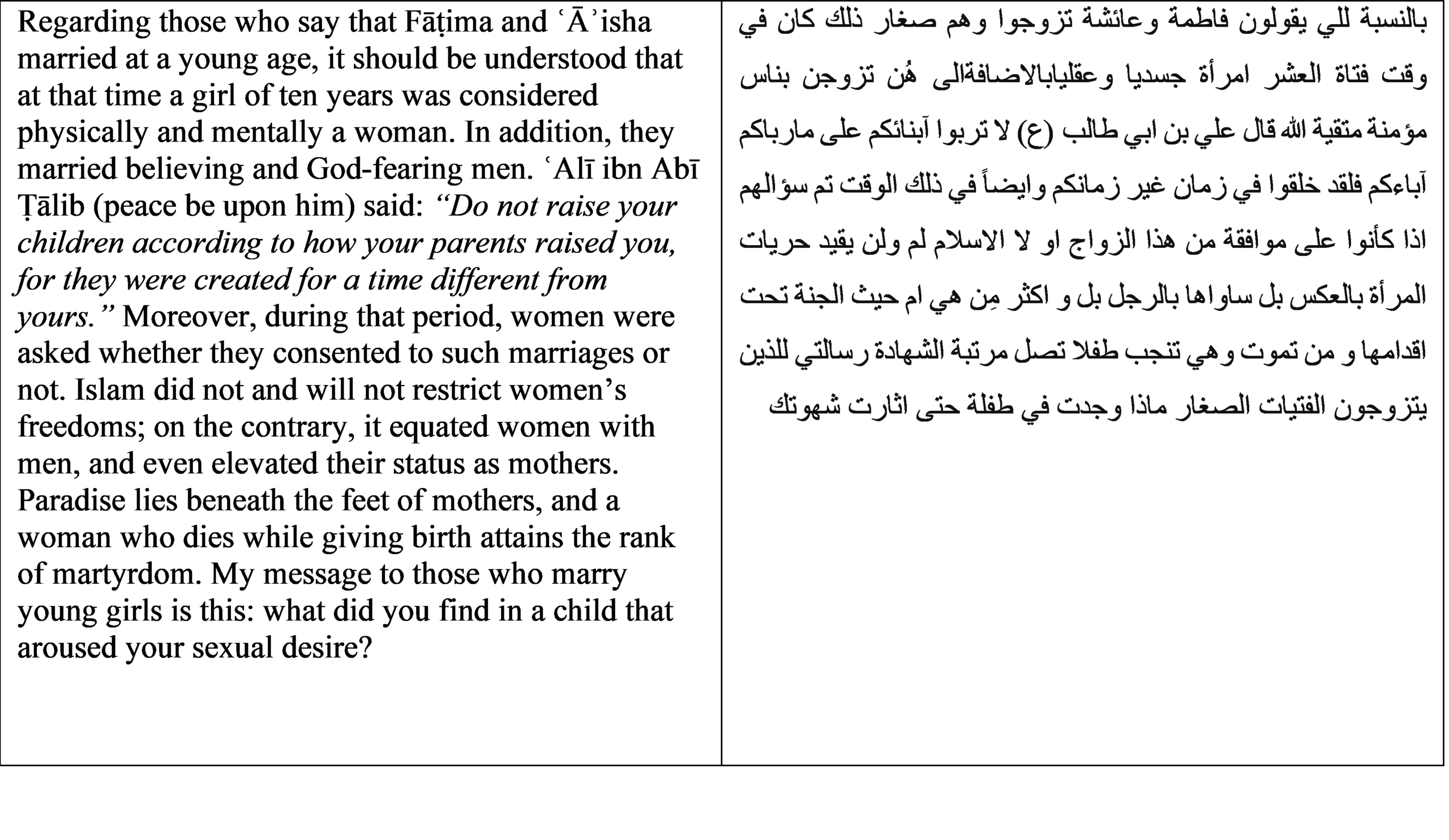 Referring to the marriages of Fatima and Aisha, the commenter argues that such unions occurred in a historical context in which girls were believed to reach physical and mental maturity earlier than is commonly understood nowadays and therefore cannot be uncritically applied to contemporary social realities. To support this position, the commenter invokes a well-known saying attributed to Ali ibn Abi Talib, “Do not raise your children as your parents raised you, for they were created for a time different from yours”, to advocate for social adaptation and contextual change.
Rather than rejecting a religious view, the comment strongly defends women’s status within Islamic teachings, emphasizing that Islam does not restrict women’s freedoms but rather affirms their dignity and equality, and in some respects elevates their moral standing, particularly in their role as mothers. The invocation of religious ethics, such as the belief that “Paradise lies beneath a mother’s feet”, serves to reframe Islam as fundamentally incompatible with the exploitation of young girls. The comment concludes with a powerful moral appeal, posed as a rhetorical question that challenges the ethical legitimacy of marrying children, thereby repositioning religious discourse as a resource for critique rather than justification. This excerpt highlights the dialogic and confrontational character of digital Arab publics, where debates over religion, morality, and modernity are actively negotiated.
This response also illustrates how YouTube functions as a platformed space of intra-religious debate, where traditionalist and reformist interpretations of Islam are publicly contested. It likewise demonstrates that religious discourse within Arab digital publics is neither monolithic nor static, but dynamically negotiated through emotionally charged, visible, and dialogic exchanges facilitated by global digital platforms. These discursive tensions reveal how platform-mediated discussions become spaces in which competing moral and religious interpretations are publicly negotiated.
- Patterns of Cultural Self-reflection and Transnational Solidarity
This grouping reflects comments that move beyond individual reactions to situate the issue within broader cultural and transnational contexts. It includes both critical reflections on social norms and expressions of solidarity across national boundaries within the Arab world. Another recurring sentiment in the dataset was collective self-critique. Several users described “Arab backwardness” or “ignorance” as structural causes of child marriage, framing Nujood’s story as symptomatic of wider social decay. This form of cultural introspection positions child marriage as a broader societal issue rather than an isolated individual case. One particularly elaborate comment from a Moroccan viewer praised Nujood’s courage while denouncing child marriage as contrary to religious, legal, and humanitarian principles. The comment adopted a transnational feminist tone, expressing both pan-Arab and gender solidarity:
| A great salute from your Moroccan sister to our innocent heroine Nujood... congratulations on your courage, which surpasses millions of Yemeni men. | تحية كبيرة من اختك المغربية لبطلتنا البريئة نجود ... مباركة ومسعودة على نصرها وشجاعتها يلي تساوي ملايين رجال اليمنيين |
These responses highlight YouTube’s role in facilitating both internal critique and transnational connection. Cultural self-reflection positions child marriage as an aspect of broader societal challenges, while expressions of solidarity, such as support from users in different Arab countries, demonstrate the platform’s capacity to enable shared emotional and ideological engagement across borders. These responses also illustrate how local concerns can acquire broader cultural resonance through digital circulation and audience engagement.
Together, these discursive categories demonstrate that YouTube comments are not merely reactions, but structured forms of meaning-making shaped by emotional, cultural, and ideological factors. The coexistence of condemnation, empathy, religious debate, and cultural critique illustrates the platform’s role as a space for both solidarity and contestation. These patterns reflect the dynamics of platform-mediated affective publics, where visibility, emotional intensity, and cross-cultural interaction shape how social issues such as child marriage are interpreted and debated. These responses illustrate how a locally situated issue can acquire broader cultural resonance through processes of digital circulation and audience engagement.
YouTube as a Mediator of Visibility, Affect, and Interpretation
Beyond the sentiments themselves, the findings provide insight into how platform-mediated conditions of visibility, participation, and interpretation may influence audience engagement with the issue of child marriage. While the present study does not directly examine recommendation systems or algorithmic processes, the observed patterns can be interpreted by drawing on existing platform studies and digital geopolitics. In this case, YouTube functions as a transnational mediator, illustrating how a local Yemeni narrative can be transformed into a global conversation through platform-mediated visibility and engagement. This role is not neutral; it is influenced by digital infrastructures that reinforce disparities in visibility, empathy, and cultural interpretation. In this case, YouTube provided a highly visible environment through which a local Yemeni narrative became accessible to geographically dispersed audiences. The platform facilitated the circulation of competing interpretations, emotional responses, and moral evaluations, illustrating how digital environments can mediate engagement with social issues across cultural contexts. Through these dynamics, the case illustrates how platform-mediated environments may contribute to the visibility, affective circulation, and interpretation of controversial social issues within transnational digital publics. Taken together, the findings indicate that the significance of the Nujood Ali case extends beyond the televised report itself. The interaction between media representation and audience discourse reveals how meanings are continuously negotiated within digital environments, generating multiple interpretations of childhood, justice, authority, and social change.
Discussion
The discussion interprets the findings as insights derived from a single platform-mediated case rather than as general conclusions about YouTube or digital platforms more broadly. The value of the case lies in illustrating how media representation, audience discourse, and platform-mediated conditions of visibility and engagement may intersect within a specific digital context. The thematic patterns identified in the televised report on Noujood Ali’s case, namely; child rights and abuse, legal and social constraints, the role of judicial systems, the impact of child marriage on victims, and forms of empowerment and resistance; closely mirror findings documented across scholarly studies of child marriage in the Arab world and beyond. Research consistently frames child marriage as a violation of children’s rights associated with multiple forms of harm, including physical abuse, curtailed education, and long-term health consequences (Fan and Koski 2022). Legal and social challenges, particularly the coexistence of statutory law with customary or religious practices, are widely identified as key factors enabling child marriage, even in contexts where minimum-age legislation exists (Arthur et al. 2017; Hunersen et al. 2021). Importantly, recent scholarship has moved beyond portrayals of child brides as passive victims, emphasizing girls’ agency, resistance, and strategic engagement with legal and social institutions instead, as exemplified by Noujood Ali’s pursuit of judicial intervention (Lokot et al. 2021). Studies from both conflict-affected Arab contexts and global settings further highlight the central role of advocacy, media visibility, and transnational human-rights discourse in bringing individual cases into the global public sphere and catalyzing legal and policy debates (Mourtada et al. 2017; Greene et al. 2023). These parallels suggest that the themes which emerged from the televised report are not exceptional but are embedded within broader, well-documented patterns in child-marriage research more broadly, reinforcing the case's relevance for understanding structural inequalities, legal accountability, and pathways to empowerment across diverse contexts.
The sentiment analysis reveals that negative affect dominates audience responses, with expressions of outrage, empathy, and moral condemnation emerging as central reactions to child marriage. Such emotional responses are consistent with research showing that mediated narratives of gendered injustice frequently elicit strong moral reactions, particularly in digital publics where affective engagement is amplified (Bavel et al. 2024). At the same time, religious discourses surrounding child marriage are actively debated, reflecting significant internal diversity within Arab publics rather than a singular or uniform interpretation of sharia or cultural tradition. Previous studies have similarly demonstrated that digital platforms in the Arab world function as arenas of contestation in which religious, cultural, and gender norms are negotiated and reinterpreted (Altoaimy 2018; Thorsen and Sreedharan 2019). In the specific context of child marriage, Mohammed (2025) likewise documents polarized yet dialogic engagements in Arab media discourse, where religious justifications are challenged alongside rights-based and humanitarian framings. These findings situate audience sentiment not merely as an emotional reaction but as part of a broader deliberative process through which Arab publics articulate moral judgment, empathy for victims, and competing normative positions. Analysis of the televised report on Nujood Ali and the YouTube comments responding to it provides a multifaceted understanding of how global technology platforms shape the moral and affective framing of Arab social issues. These emotional articulations exemplify what Papacharissi (2015) terms “affective publics”, or digitally networked collectives whose political engagement is expressed through emotion, empathy, and moral positioning rather than institutional participation.
In this affective economy, YouTube functions not merely as a site for expression but as an actor that structures the visibility and emotional intensity of Arab social issues. Social media platforms have transformed the Arab mediascape by privileging emotional expression and viral affect (Kraidy 2016; Al-Rawi 2020). The preponderance of outrage, moral condemnation, and empathy in this study may be interpreted in relation to scholarship suggesting that engagement-driven architectures can contribute to the visibility and circulation of emotionally charged content. At the same time, the findings reinforce Sakr’s (2023) and Zayani’s (2015) argument that Arab digital media operate within transnational infrastructures of power governed by algorithmic and linguistic hierarchies. The limited visibility of Arabic-language content and the technological constraints of AI-based sentiment tools reveal a persistent form of digital marginalization, echoing the notion of platform geopolitics (van Dijck et al. 2018), and illustrating the way global infrastructures encode power relations into their very design. These asymmetries suggest that YouTube’s algorithmic architecture is not culturally neutral but may influence the legibility and emotional resonance of Arab narratives in global spaces.
The polarized exchanges in the comment threads, particularly between religiously defensive voices and reformist critics, mirror Zein’s critique of Arab television (2020), which often mediates victims’ experiences through elite or technocratic framings. On YouTube, these hierarchies are disrupted but not eliminated; publics contest religious, cultural, and moral meanings directly, transforming the platform into a site of participatory contestation. This dialogical engagement demonstrates the evolution of Arab media discourse from one-way representation to platformed negotiation, in which identity, faith, and modernity are debated within a global attention economy. These dynamics align with Aouragh and Chakravartty’s (2016) framing of platform geopolitics, which conceptualizes global digital infrastructures as geopolitical actors that shape the circulation and interpretation of Arab narratives. Drawing on existing scholarship, the case of Nujood Ali in relation to YouTube’s recommendation systems, comment architectures, and engagement metrics can be understood as influencing the visibility of her story and the circulation of emotional discourse surrounding it. The resulting moral economy (i.e., empathy from some, cultural defensiveness from others) is associated with both platform-mediated visibility and geopolitical significance.
This underscores the concept of platformed visibility (Fabricius 2025): a condition in which recognition, empathy, and critique of Arab social issues emerge not only through journalism or activism but also within platform-mediated environments. Digital infrastructures have become the new mediators of Arab gender and human rights narratives, influencing the ways in which Arab suffering and resilience become visible to global publics. Thus, global technology platforms such as YouTube, Meta, X, and TikTok do not merely host Arab media, but they actively participate in its reorganization, contributing to the circulation of local experiences among transnational audiences. In this context, the case of Nujood illustrates how global digital infrastructures shape not only the reach but also the emotional and ideological framing of Arab stories. The platform’s algorithmic and linguistic design may influence which voices gain greater visibility, which moral discourses gain traction, and which forms of empathy are made visible to international audiences. Consequently, YouTube functions as a geopolitical mediator that may influence conditions of visibility, emotion, and cultural interpretation.
This study, therefore, broadens existing scholarship on media advocacy and child marriage (Nnenna 2023; Alqahtani and Alqahtani 2022) by showing that advocacy itself has shifted into algorithmic spaces. Whereas earlier Arab media activism relied on national television, print journalism, or institutional campaigns, today’s struggles for attention, empathy, and reform unfold within globalized infrastructures in which visibility is contingent on engagement metrics and linguistic accessibility. The visibility of Arab women’s rights issues is thus inseparable from the political economy of platform governance. Ultimately, this research contributes to Arab media studies by showing that YouTube’s algorithmic systems are not passive conduits but active geopolitical forces. They mediate how Arab publics communicate internally and how their stories are translated globally, shaping empathy, outrage, and recognition through platform logics. To understand the evolving relationship between media, culture, and gender in the Arab world, scholars must therefore attend to the technological and geopolitical dimensions of digital visibility.
It is important to distinguish between patterns directly observed in this study’s dataset and broader platform dynamics discussed in existing scholarship. While this study identifies patterns of emotional intensity, visibility, and cross-cultural interaction within a specific case, it does not directly measure algorithmic processes such as recommendation systems or ranking mechanisms. Instead, these findings are interpreted in relation to established theoretical frameworks that describe how such systems are understood to operate. These interpretations emerge primarily from the critical media analysis of the report and comment corpus, while platform studies and digital geopolitics provide contextual perspectives through which the broader implications of the case may be understood.
Conclusion and Future Research
Through an in-depth examination of a single widely circulated report on Nujood Ali and its associated YouTube comments, this study illustrates how platform-mediated visibility, affective engagement, and cross-cultural interpretation may operate within a specific digital media context. The findings provide a case-based analysis of how a local Arab social issue was represented, discussed, and interpreted in a digital platform environment. Rather than offering general conclusions about YouTube or platform governance, this study contributes an analytically rich illustration of how these dynamics can be examined through a qualitative case-study approach. Accordingly, the findings should be interpreted as illustrative rather than generalizable. Their contribution lies in providing a detailed case-based account of platform-mediated discourse that may inform future comparative studies across platforms, issues, and contexts.
This study is not without limitations. Given the single-case design, the findings should not be interpreted as generalizable across all platform contexts. Rather, the study provides an in-depth illustration of how platform power operates in a specific instance, offering analytical insights that may inform future comparative research. Accordingly, the findings should be understood as interpretive insights into a specific platform-mediated discourse, rather than as generalizable measurements of public opinion or attitudes. Future research could expand this investigation by analyzing how other global platforms, such as TikTok, Meta, and X, may influence Arab digital expression, particularly with respect to gender, religion, and activism. Comparative studies could analyze how different algorithmic designs lead to unique emotional and moral frameworks across the region. More work is also needed on Arabic-language bias in AI systems, including issues such as transcription accuracy, content moderation, and sentiment detection, which remain underexplored aspects of digital inequality. Ethnographic and computational methods could help reveal how Arab users strategically navigate or challenge these structural limitations to promote alternative narratives. By combining platform analysis with critical Arab media scholarship, future studies may better understand how platform geopolitics influence visibility, empathy, and agency within Arab digital ecosystems.
Ethical Considerations and Data Handling
This study is based on publicly available comments posted on a widely accessible YouTube video. Because the material was available in an open digital environment and did not require restricted access, it was treated as publicly available data for research purposes. Nevertheless, given the sensitivity of the topic, particular care was taken in the handling and presentation of the data. Usernames, profile identifiers, hyperlinks, and any potentially identifying information were excluded from the dataset and are not reported in this article. Comments cited in the analysis were selected because they exemplified broader thematic and discursive patterns identified during coding, including condemnation of child marriage, religious justification, cultural self-reflection, and expressions of solidarity. This study does not seek to evaluate individual users but rather to analyze broader discursive patterns emerging within the comment corpus. Particular attention was paid to preserving anonymity and avoiding the disclosure of information that could facilitate the identification of individual commenters.